📖 Introduction & Why This Book Matters
Imagine if Avatar: The Last Airbender was rated R and directed by someone who wanted to hurt you. That is The Poppy War.
R.F. Kuang does not care about your comfort. She cares about the truth of war. Most fantasy novels treat magic like a superpower or a tool. In this book, magic is a radioactive addiction that eats you alive. This book matters because it rejects the Western fantasy tradition of the "noble quest." It replaces knights and castles with a world inspired by 20th-century China and replaces glory with trauma.
It creates a reading experience that feels dangerous. You do not just read this book; you endure it.
✍️ Plot Summary
Rin is a war orphan from the backwaters of the Empire. She has one goal: to escape a forced marriage and a life of servitude. She studies herself nearly to death and aces the Keju test to enter Sinegard, the elite military academy.
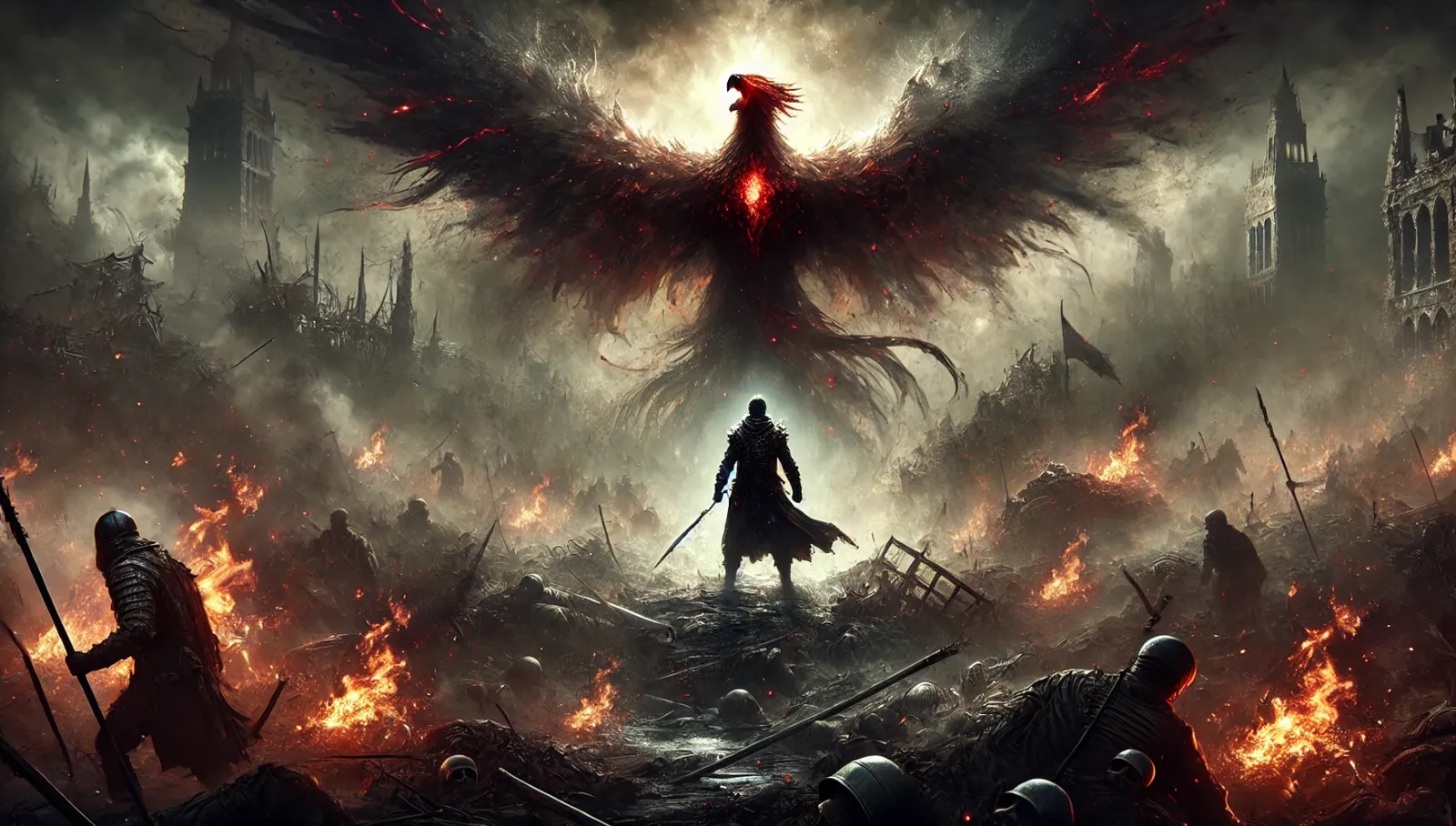
The first half of the book feels familiar. It is a school drama where the poor outsider outworks the rich kids. But then the Federation of Mugen invades. The school drama ends. A brutal fight for survival begins. Rin discovers she is a shaman capable of calling down the Phoenix god. But gods in this world are not benevolent. They demand a price for their power. Usually, that price is blood.
💡 Key Takeaways & Insights
The "bait and switch" of Genre Kuang creates a masterclass in tonal whiplash. The first act lures you in with familiar Young Adult tropes. You get the mean rival, the eccentric teacher, and the training montage. You feel safe. Then the war starts. The transition is violent and jarring. This is intentional. It mimics the way war disrupts normal life. It does not knock on the door. It kicks it down.
Prose that Bleeds The writing style is stark and efficient. Kuang does not use flowery language to hide the gore. She uses simple sentences to describe horrific acts. This lack of filter makes the violence feel immediate and sickening rather than cinematic.
The Villain Origin Story We are used to heroes who resist the temptation of power. Rin runs toward it. Her decisions are frustrating and terrifying. She is not fighting to save the world. She is fighting because she is angry. This is a study of how a victim becomes a monster, believing the world gave her no other choice.
Magic as Addiction The magic system is the most "cool" yet terrifying aspect of the lore. Shamans take opium to open their minds to the gods. They take other drugs to shut the gods out. It frames magical power not as a gift but as a chaotic substance abuse problem. It is a brilliant metaphor for the self-destructive nature of absolute power.
🤯 The Most Interesting or Unexpected Part
The third act contains a decision so morally catastrophic that it redefines the entire series. Usually, a protagonist spends three books working up to a world-altering choice. Rin makes hers in book one. It leaves you staring at the page and wondering how you are supposed to root for her in the sequel. It is among the boldest narrative choices I have seen in a modern debut.
🏛️ How This Book Applies to Real Life
Who should read The Poppy War?
Anyone who loves fantasy with historical depth and real-world parallels.
History buffs interested in the Second Sino-Japanese War.
People who want to see the "chosen one" trope dismantled and set on fire.
Beyond being a gripping novel, The Poppy War serves as a lens into the cost of power and the trauma of history. Kuang reminds us that history doesn't exist in a vacuum. We're shaped by the past, and our choices define whether we repeat it or break the cycle.
📚 Final Rating
3.8 / 5 Stars
🎯 Should you read it? Maybe. Check your mental headspace first. This is a masterpiece of grimdark fantasy—sleek, intelligent, and devastating. If you want a book that will haunt you for weeks, pick this up. If you want a happy ending, run away. Rin is not a character you are meant to relate to or cheer for; she is a warning. You will spend the book hoping she finds the discipline to overcome her rage and break the cycle of violence. But be warned: she will disappoint you. She rejects the path of peace for the path of power, and that tragedy is the entire point.
🔥 Final Thought: R.F. Kuang wrote a book that screams. If you are ready to listen, it is one of the most unforgettable rides in the genre.
Discussion Topics
- The Cost of Power, Vengeance, and the "Villain Origin Story" Unlike traditional fantasy heroes who resist the temptation of absolute power, Rin actively runs toward it, leading to a climax that feels a lot like a "villain origin story" where a victim becomes a monster. At the end of the novel, Rin chooses to call upon the Phoenix and commit magical genocide against the Federation of Mugen to win the war. This directly contrasts with the historical Speerly queen, Mai'rinnen Tearza, who chose self-sacrifice and submission to maintain peace rather than unleash the Phoenix's destructive wrath.
*Discussion Questions: Do you agree with Tearza’s decision, or do you sympathize with Rin’s choice to obtain power and vengeance, even though it comes at a terrible cost? How does Kuang's portrayal of Rin dismantle the traditional "chosen one" trope? Furthermore, how does the book's framing of magic as a "radioactive addiction"—requiring opium to access or block out the gods—serve as a metaphor for the self-destructive nature of absolute power?*
- Real-World History and Trauma in Fantasy The Poppy War explicitly rejects the Western fantasy tradition of the "noble quest," replacing knights and castles with a world inspired by 20th-century China and replacing glory with trauma. The author, R.F. Kuang, based the brutal chapters set in Golyn Niis directly on Iris Chang’s account of the Nanjing Massacre, noting that "very little was made up—most of what you see truly happened." The novel also explores the horrific medical experiments and atrocities committed by the Federation, reflecting the realities of the Second Sino-Japanese War.
*Discussion Questions: How does Kuang’s academic background and use of modern Chinese history change the world and magic system she creates? How does knowing that the unflinching depictions of genocide, sexual violence, and torture are mirrored on real-world events affect your reading of the story? How does the novel serve as a lens to explore the trauma of history?*
- Class, Colorism, and the Illusion of Meritocracy When Rin aces the Keju exam to escape a forced marriage, she enters Sinegard Academy believing she has proven her worth. However, she immediately faces intense discrimination for her southern peasant background and her dark skin. While the Nikara Empire claims the Keju makes the country a meritocracy, characters note that the system is actually designed to keep the poor and illiterate in their place.
*Discussion Questions: How do the underlying sociopolitical themes of race and colorism affect Rin's experiences and decisions throughout the novel? How do her relationships with wealthy, privileged Sinegardian classmates like Nezha, Venka, and Kitay highlight the uneven power dynamics in the Empire? Ultimately, does Rin ever truly find a "found family" and a place she belongs with the Cike, or does her background always keep her as an outsider?*
Discussion
Comments are moderated and will appear after review by the site owner.
No comments yet. Be the first to share your thoughts!